
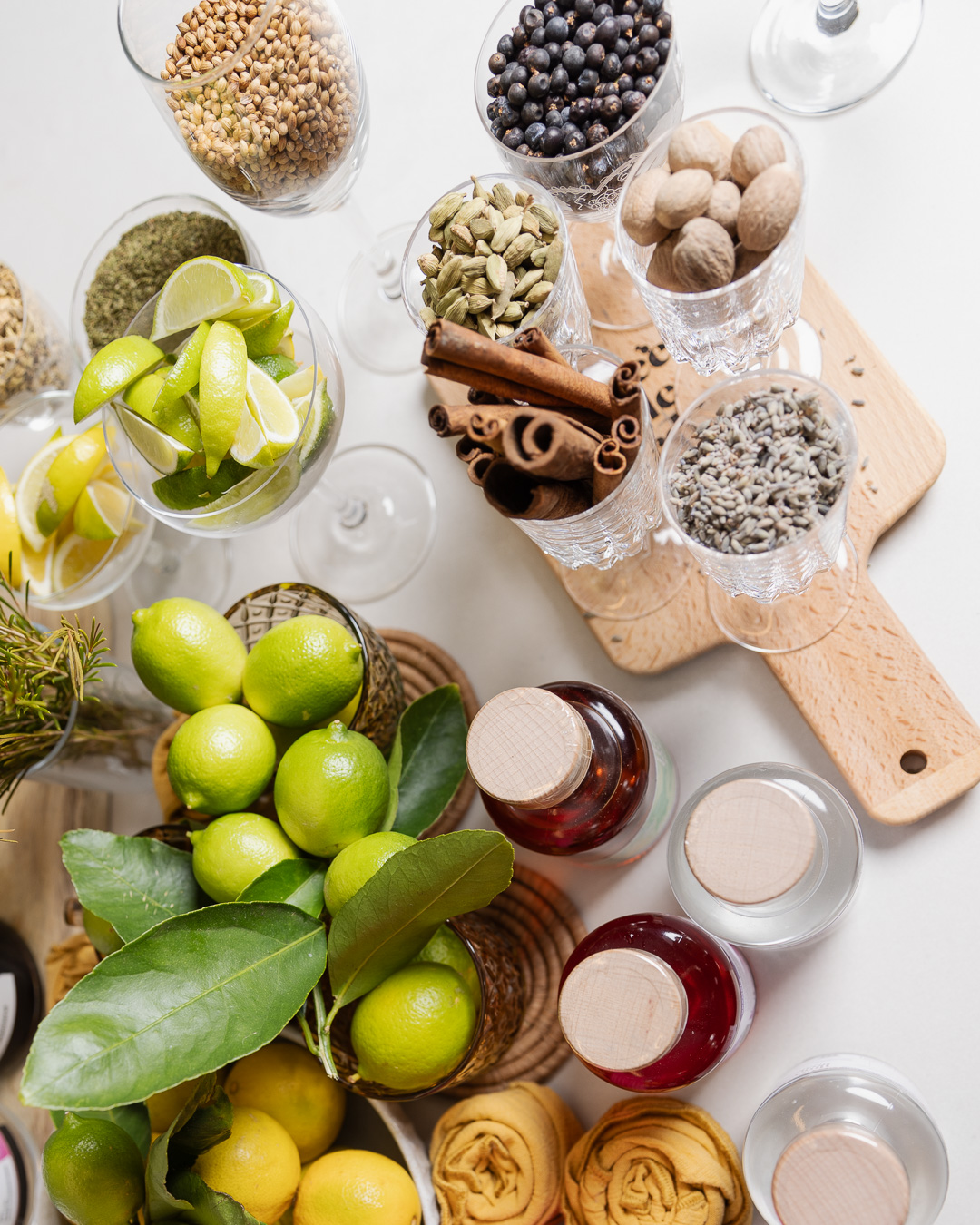
There's a eucalyptus tree that smells like strawberries. Not faintly, not metaphorically — actually, unmistakably, like strawberries warmed in the sun. It grows in the highland forests of New South Wales and Victoria, it's called strawberry gum (Eucalyptus olida), and it's one of the reasons our gin tastes the way it does.
Australian native botanicals aren't a marketing angle. They're an honest answer to a real question: what should Australian gin taste like? Not what London decided gin should taste like in the 18th century. What grows here, in this soil, in this climate, in this specific and extraordinary part of the world — and what happens when you distil it?
This is a proper look at the plants that go into our gin. What they are, where they come from, what they taste and smell like, and why they matter.
Strawberry Gum (Eucalyptus olida): The One People Ask About
Strawberry gum is a medium-sized eucalyptus native to the highland forests of north-eastern New South Wales and southern Victoria, growing at altitude where the air is cooler and the seasons are more distinct than on the coast. It's not the eucalyptus people picture — no drooping grey-green leaves, no koala associations. The leaves are narrow, dark and glossy, and when you crush one, the smell that comes off it is genuinely surprising.
What does strawberry gum smell like? The scent is sweet and fruity in a way that's hard to reconcile with a eucalyptus tree. The primary compounds responsible are methyl cinnamate and ethyl cinnamate — the same aromatic esters found in strawberries, with hints of rose and a faint woody background. Warm the leaf between your fingers and it intensifies. It's clean and fresh rather than heavy or cloying.
What does strawberry gum taste like? In cooking — and native food producers have been working with it for years — strawberry gum contributes a sweet, faintly floral fruitiness that works particularly well with red fruits, chocolate, and cream-based desserts. It's used as a leaf, a dried powder, and an extract. The flavour is more delicate than the scent suggests, and it integrates rather than dominates.
What does strawberry gum do in gin? In distillation, strawberry gum contributes soft fruitiness and a floral top note that sits alongside juniper rather than fighting it. In our Signature Gin, it's part of what creates that silky, slightly sweet quality in the mid-palate — you're not necessarily thinking “strawberry” when you drink it, but it's what makes the gin feel rounded rather than austere.
It's also part of why Australian gin made with native botanicals has a distinct character that isn't London Dry and isn't trying to be. Strawberry gum doesn't grow in England. It never did. It belongs here.
Lemon Myrtle (Backhousia citriodora): More Lemon Than Lemon
If strawberry gum is the surprise, lemon myrtle is the one that earns the respect of people who know their botanicals.
Lemon myrtle is a rainforest tree native to south-east Queensland, and it has the highest natural concentration of citral — the compound responsible for lemon flavour and aroma — of any plant in the world. Higher than lemon. Higher than lemon verbena. The scent is clean, bright citrus with a floral undertone, and it's intense in a way that makes fresh lemon peel seem restrained by comparison.
The Kaurna and other First Nations peoples have used lemon myrtle for thousands of years. Contemporary native food producers have built a genuine industry around it — you'll find it in teas, spice mixes, oils, and increasingly in gin.
What does lemon myrtle taste like in gin? Lemon myrtle brings a bright, uplifting citrus character that's cleaner and more aromatic than you'd get from lemon peel alone. It has persistence — it doesn't disappear on the finish the way fresh citrus can. In our Signature Gin, it works alongside lime peel to build a citrus profile that feels layered rather than one-note. In the Navy Strength, it cuts through the intensity of the higher ABV and gives the gin its lift.
Pepperberry (Tasmannia lanceolata): Heat With a Twist
Mountain pepper — or pepperberry — is a shrub native to the cool temperate rainforests of Tasmania and the highlands of south-eastern Australia. It produces small, dark purple-black berries with a heat that's more complex than standard black pepper, followed by a distinctive numbing sensation on the palate.
The Tasmanian Aboriginal people used it as both a spice and a medicine. It became well-known in the native food revival of the 1990s and is now used by chefs across Australia for its unusual combination of heat, berry character and that distinctive tingle.
What does pepperberry taste like in gin? The heat from pepperberry arrives more slowly than standard pepper and carries a fruity, slightly resinous quality alongside it. In gin, it adds warmth and complexity without the one-dimensional sharpness of conventional pepper. It integrates particularly well in spirits intended to be drunk with ice — as the drink chills, the heat comes and goes in waves rather than sitting permanently in the back of the throat.
In the Signature Gin, pepperberry provides subtle warmth and spice depth. In the Navy Strength, at higher ABV, it's more assertive — one of several botanicals that makes the Navy feel like it means business.
Geraldton Wax (Chamelaucium uncinatum): The Floral Note Nobody Can Name
Geraldton wax is a flowering shrub native to Western Australia, named for the coastal city of Geraldton, where it grows prolifically in sandy soils. It's one of Australia's most recognisable native flowers — clusters of small white and pink blossoms on fine, needle-like foliage — and it has a delicate, honey-like floral fragrance.
It's less commonly encountered as a food or botanical ingredient than lemon myrtle or pepperberry, which is part of why it works so well in gin: it contributes a floral note that people struggle to identify but keep noticing. “There's something floral in this — what is that?” is a question we get at the tasting room fairly regularly.
What does Geraldton wax contribute to gin? Florality and a soft, slightly honeyed quality that rounds out the top notes. It doesn't assert itself — Geraldton wax is a supporting player, the kind of botanical that would be missed if it were gone but rarely gets the solo. In the Signature Gin, it's part of what creates the perfumed quality in the finish.
Coriander: The Local Connection
Coriander seed is one of the classic gin botanicals — it's in almost every gin made, alongside juniper, and it contributes a citrusy, slightly spicy warmth. What makes our coriander slightly different is that it's locally sourced from South Australia, which means the supply chain for even this familiar ingredient connects back to the same landscape as the native botanicals around it.
Coriander seed in gin is dry and slightly earthy, with citrus overtones that bridge the juniper and the brighter botanicals sitting alongside it. It's a background note — present throughout, never dominant.
The Full Signature Gin Botanical List
The Signature Gin uses all four native botanicals above alongside a classical gin backbone:
- Juniper — defining gin character: pine, resinous, clean (traditional)
- Orris root — fixative; earthy, slightly violet depth (traditional)
- Liquorice root — softness, sweet backbone (traditional)
- Nutmeg — warmth, spice (traditional)
- Lemon myrtle — citrus brightness, aromatic lift (Australian native)
- Strawberry gum — soft fruitiness, floral (Australian native)
- Pepperberry — warmth, spice complexity (Australian native)
- Geraldton wax — floral, honeyed top notes (Australian native)
- Coriander — citrus-spice bridge (locally sourced, SA)
- Lime peel — fresh citrus (traditional)
- Vanilla bean — softness, sweetness on the finish (traditional)
The result is a gin that has all the hallmarks of a classic expression — it's clearly gin, it drinks cleanly with tonic — but with a character that doesn't exist anywhere else. That's not marketing. It's just what happens when you build a botanical list around where you are.
Where It Comes From: Grapes, Botanicals, and a Closed Loop
The base spirit in our gin is made from leftover wine grapes sourced from Jeanneret Wines, right next door to us on Jeanneret Road in Sevenhill. A grape-based spirit carries botanical flavour differently from a grain base — it has its own faint sweetness and texture that sits underneath the botanicals and changes how they express in the glass.
After distillation, the spent botanicals go to feed local livestock. The kitchen scraps from the food operation compost back into the vineyard. It's a genuinely circular process and one we didn't engineer for the optics — it's just what makes sense when your neighbours are farmers and winemakers.
You can taste something like this in the gins. It's not a claim we can quantify. But there's a connection between the land, the grapes, the botanicals and what ends up in your glass that's more direct here than it is in most distilleries.
Why Native Botanicals Matter Beyond Flavour
There's something that happens to a place's food and drink culture when it starts paying serious attention to what grows there natively. The native food movement in Australia has been building for decades — slow at first, then faster, as chefs and producers started working seriously with First Nations knowledge about what's edible, what's medicinal, and what's remarkable.
Gin, with its open botanical tradition, is one of the cleaner expressions of that movement. The rulebook says you need juniper and nothing else — everything else is in play. And when you're making gin in a country with 25,000 species of native plants, many of which have extraordinary flavour properties that the rest of the world has barely discovered, the interesting question isn't “what can we add?” but “where do we even start?”
Strawberry gum is a reasonable answer. Lemon myrtle. Pepperberry. Geraldton wax. There'll be others. The landscape is generous.
Taste Them for Yourself
The easiest way to understand what these botanicals actually contribute is to taste the gins side by side. The tasting flight at the cellar door is $25 and covers the Signature, Navy Strength and Bramble — three expressions that use the same botanical palette in different configurations, at different strengths. The differences between them are an education in how context changes perception.
Plan your visit to the tasting room →
Book a tasting — we'll walk you through it →
Or take a bottle home from the shop →
Frequently Asked Questions
What is strawberry gum? Strawberry gum (Eucalyptus olida) is a eucalyptus tree native to highland forests of New South Wales and Victoria. Its leaves contain high concentrations of aromatic compounds that produce a genuine strawberry-like scent and flavour, making it a popular ingredient in native Australian cuisine and craft spirits.
Is strawberry gum edible? Yes. Strawberry gum leaves and leaf powder are used in native Australian cooking in desserts, spice rubs, teas and distilled spirits. It has a long history of use by First Nations peoples and is now commercially cultivated as a food ingredient.
What does strawberry gum taste like? Sweet and faintly fruity, with floral notes and a clean finish. In cooking it pairs particularly well with red fruits and chocolate. In gin it contributes soft, rounded fruitiness and a fragrant top note.
What is lemon myrtle used for in gin? Lemon myrtle contributes bright citrus aroma and flavour — it has a higher concentration of citral than lemon itself. In gin it adds aromatic lift and a clean, persistent citrus character that works alongside or instead of fresh citrus peel.
What makes Australian gin different from London Dry? London Dry gin is defined by juniper and typically uses European or Mediterranean botanicals. Australian craft gin — particularly expressions using native botanicals — draws on ingredients that only grow in Australia: lemon myrtle, strawberry gum, pepperberry, Geraldton wax and others. The result is flavour profiles that are recognisably gin but unlike anything made anywhere else.
Where can I try gin made with Australian native botanicals? Three Little Birds Distillery at 22 Jeanneret Rd, Sevenhill in the Clare Valley, South Australia is open Thursday to Sunday. Tasting flights are $25. No booking required, though you can book ahead online.